What counts as a dog walk? For much of the industry, the answer is modest: collect the dog, head to a dog park or wander without structure, allow a bathroom stop wherever it happens, and return home. That has become the accepted standard of the experience. We believe dogs deserve a higher one.
Our credential for saying so is practice, not opinion. Pack Leader Dogs began as a walking company in Hoboken, and the walk has sat at the center of our method ever since. When we hired walkers of our own, every one of them passed an extensive application and interview, then completed a two-week training program before taking a leash alone: dog psychology, proper leash handling, walking multiple dogs, correcting unwanted behaviors, and the protocol for entering and leaving a client's home. Two weeks may sound like a great deal of preparation for a walk. It is exactly enough.
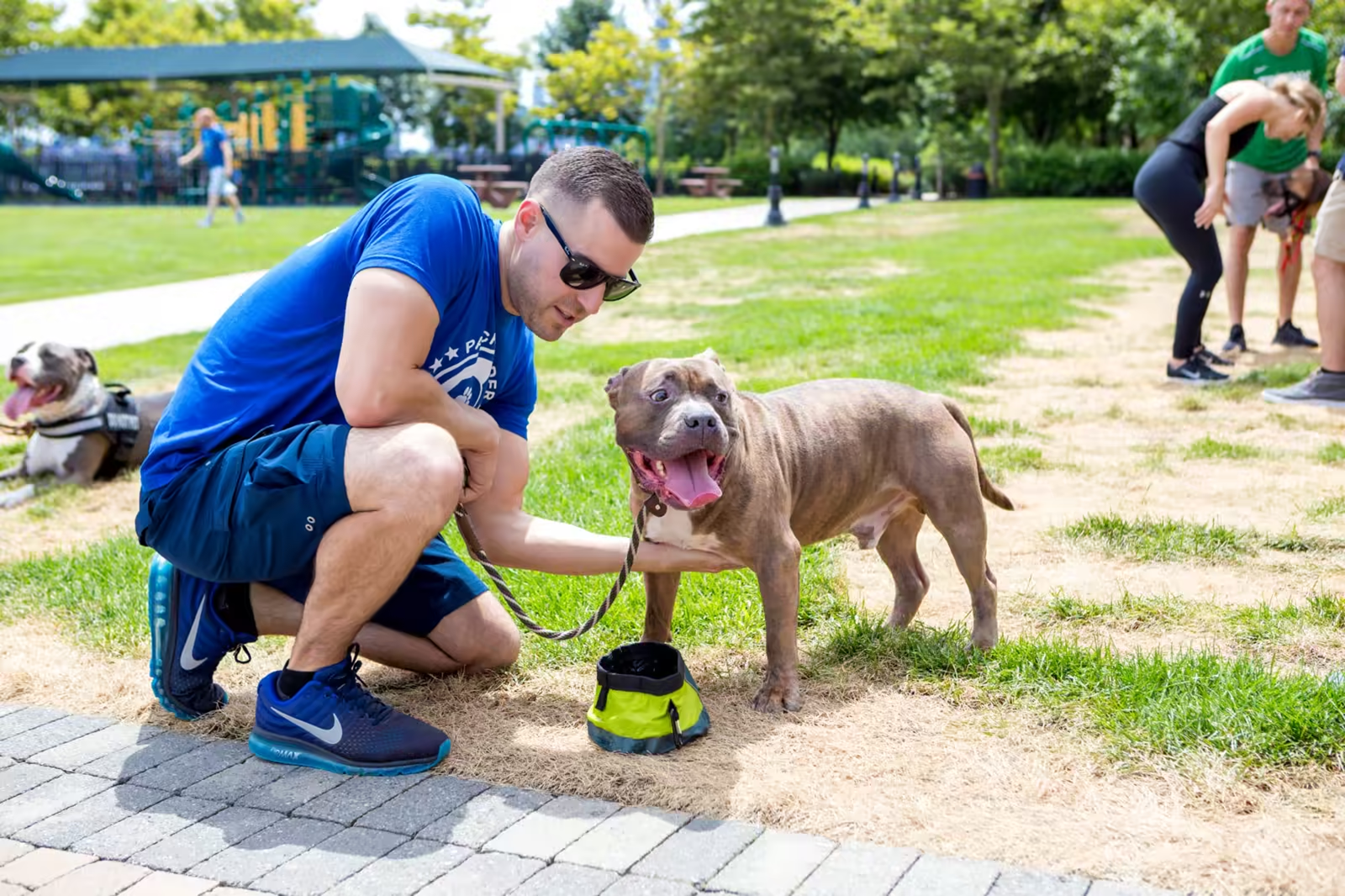
Training those walkers put me back on the streets during prime walking hours, ten in the morning to three in the afternoon, hours I usually spent with our residents in training. Watching my own industry at work was instructive. I saw dogs walking out in front, in the leader's position, towing their walkers behind them. I saw marking at every post, lunging and barking at passing dogs and people, entries into the dog park at full excitement, and intensity inside the park at levels that lead, predictably, to fights. Once I watched a walk cover a hundred feet in half an hour, most of it spent standing still with a phone.
Little of this comes from a lack of caring. The signs around town promise love, affection, reliability and exercise, and I believe the affection is sincere. But affection keeps a clock. Petting a dog in an excited state nurtures the excitement. Coddling a nervous dog deepens the insecurity. Love given at the wrong moment works against the dog it means to comfort; given at the right moment, it is the most powerful reward there is. Exercise has a quality to it as well. A dog dragging a tense leash in high excitement is not exercising; they are rehearsing. Twenty frantic minutes at a dog park is not a walk.
We would never accept this arithmetic for children. No family would hire someone to care for a child on the theory that affection alone is enough and rules are optional. We would want experience, judgment, structure, and warmth offered at the correct times. A dog in your home deserves the same seriousness from the people you hire.
It's time we raise the standard of dog walking.
Here is what to ask before you hand anyone the leash:
- Have the walkers been trained in dog psychology, dog training, or proper dog walking?
- How long has the company been in business? Walking companies appear and disappear quickly.
- Can they show extensive, positive testimonials?
- Are they a registered business? Ask to see proof.
- Are they fully insured and bonded? Ask for the paperwork; many will say yes without having it.
- Do they have video of how your dog will actually be walked?
- What is the application and training process for the walkers they hire?
- Can you meet the walker beforehand and watch how they will handle your dog?
- Do they show their daily work publicly, on film, so you can see how dogs in their care are actually walked?
- Do they maintain a professional website?
- Is the owner, or anyone on staff, a certified dog behaviorist?
- How much notice do you need to give to schedule a walk?
- Do they offer online scheduling and billing?
- Do they offer anything beyond the walk, such as events you can bring your dog to?
- What structure do the dogs receive on the walk, and what mental exercise?
A reputable company with a clear understanding of dog psychology will welcome every one of these questions and should meet every requirement on the list. Hesitation is itself an answer. We hold ourselves to the same test: we are fully insured and bonded, and we would expect you to ask us for the paperwork too.
In the end, the subject is simple. When walking is done poorly, the one who pays is not the company and not the owner. It is the dog. And when it is done well, an ordinary weekday walk becomes what it was always meant to be: exercise for the body, work for the mind, and half an hour of practiced calm that follows the dog home. Ask the questions, and expect real answers. Your dog cannot ask them themselves.
Further reading: Mastering the walk, on the quiet habits that make you worth following.
Discover more