It seems a small thing, meeting a dog. From the dog's side it is anything but, and most people, through no fault of their own, have been taught to do it wrong. I have lost count of the times I have been out walking a dog when a stranger approaches and asks, "Is he friendly?" Before I can answer, an arm is already extended toward the dog's face, palm down. The reasoning is kind: let him smell me, show him I am friendly. The reality, from the dog's perspective, is an approach that can feel threatening and deeply disrespectful.
The misunderstanding begins with the nose. People imagine they must place a hand inside a dog's intimate space for the dog to catch their scent. It could not be further from how a dog experiences the world. Depending on the breed, a dog's sense of smell is somewhere between one thousand and ten million times more sensitive than our own. They read your scent from many feet away, long before you arrived, and they read your energy with it. Dogs have X-ray vision for how you truly feel; a rushed approach, a high voice and direct eye contact from a stranger do not register as friendliness. They register as pressure. And a dog who is ready to smell you is not necessarily ready to be touched. Smelling is how they gather information. Touch is a privilege they grant later, if at all, and only once they feel safe.
So I am often asked: what is the best way to meet a dog?
The answer is simple. Show the dog respect.
In practice, respect is three quiet disciplines: no look, no talk, no touch. Stay calm. Do not approach the dog; let the dog approach you. Standing at ease, asking nothing, you give them the chance to learn your scent on their own terms. You show them that you understand how to behave, and that you are no threat. Whether I am meeting a dog at the first session of a training program, a dog at the home of a friend or family member, or a dog on the street, I follow this protocol every time. It keeps me safe, and it tells the dog, in their own language, that I know how to meet.
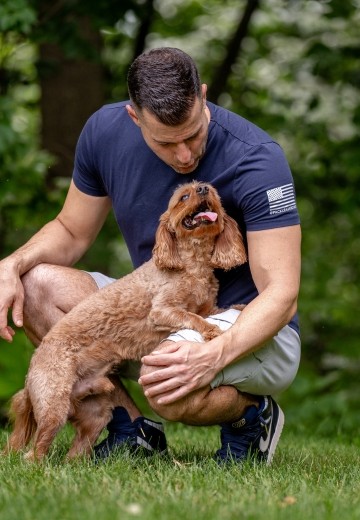
The stakes are higher than manners. Far too many dogs in this country are euthanized for bites that began with a human ignoring their space. Not every dog wants affection the moment they meet you. We hear about the dog who bit "out of nowhere" or "without warning," the dog labeled unpredictable. The truth is that dogs are remarkably predictable. In almost every such case, the dog gave warning after warning, small signs of nervousness and uncertainty that the human never received. When every signal goes unread, a dog is left with very little: a growl, or worse, a bite, in defense of themselves.
Try the quiet approach the next time you meet an unfamiliar dog. Nothing about it is passive; ignoring a dog, deliberately and calmly, is one of the most active forms of communication you have. A fearful or nervous dog will not be overwhelmed; with a little time and patience they learn to see you as no threat, and the unnecessary bite never happens. An over-excited dog settles far sooner, and the nipping and jumping never begin. A balanced dog recognizes your respect at once and accepts you.
Respect costs nothing and asks for nothing. It is the one courtesy every dog, in every state of mind, understands. Give it a try. The results may surprise you.
When the meeting is between two dogs, the same patience applies, in a different form.
Discover moreThe ideas here are behind every program at the ranch. Explore the method