Ask most owners what a dog's reward should be and they will reach for the treat pouch, or the toy bin, or the word good delivered in a high, happy voice. The finest answer I have ever heard came from none of these places. It came from a monastery.
Some years ago I spent a weekend in Cambridge, New York, as a guest of the Monks of New Skete. If the name is new to you: the community was founded in 1966, and in the decades since, the monks have become known around the world for their breeding and training of German Shepherds, and for the training of every other breed besides. Two of the most widely read dog books ever written came from their hands, How to Be Your Dog's Best Friend and The Art of Raising a Puppy.
I arrived not quite knowing what to expect. What exactly is a monk? What would the weekend ask of me? At the welcome dinner, the questions answered themselves. I met many of the brothers, among them Brother Christopher, who runs the training program, and found them easy, funny and entirely human company. We talked for hours about dogs, training styles and life, and we laughed far more than I had imagined a monastery would allow.
The next morning we drove up a long road beneath the trees and arrived to a remarkable sight: monks in long black robes, and German Shepherds everywhere around them. The adult dogs were relaxed and friendly, with one another and with people, and the depth of their socialization was plain. Every puppy born at New Skete is handled by human hands from three days old. From four weeks on, volunteers come for socialization days whose only assignment is play. Each monk keeps and cares for a shepherd of his own as part of the breeding program. Some keep two, and a few keep three.
Across the weekend, the brothers gave lectures on the history of the monastery, the workings of the breeding program, the patience behind their puppy socialization and, most important of all, their philosophy of living with dogs.
On the last day, Brother Christopher said something that has stayed with me ever since.
The ultimate reward for a dog is inclusion.
He meant that the greatest thing you can give a dog is a place inside your life. Many owners believe they already give this, and mean to. But without time set aside for training, for leadership, for rules, boundaries and limitations, a dog slides out of balance, and an unbalanced dog cannot be included anywhere. In some homes the current runs the other way: the owner's life narrows around the dog. A walk in public stops being enjoyable. Friends and family stop coming over. The dog is present, and neither of them is living fully.
So here is the awareness I would offer. A beautiful home, a basket of toys, the finest food, outfits, hugs, kisses and baby talk are not the reward your dog is waiting for. They want to be included in your life. The only road there runs through exercise, structure and, above all, leadership, so that their mind settles, their manners hold and they can go where you go, sharing in everything your days contain. The monks live exactly this way, and it shows in dogs that are visibly full of happiness and joy. If reaching that place takes the help of a professional, go and find one.
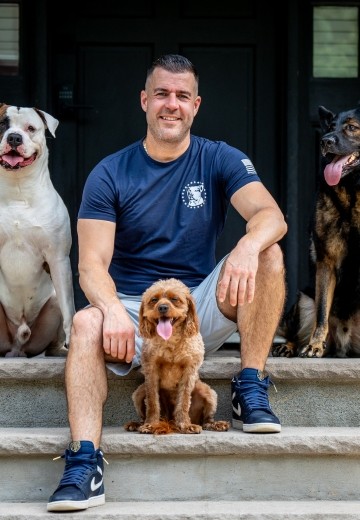
Inclusion looks ordinary from the outside, and that is the beauty of it. The dog asleep by the table while friends fill the kitchen. The dog walking calmly at your side through town. The dog who comes along, welcome everywhere, because their state of mind earns the invitation. None of it is luck.
The dog you have now may share only a chapter of your life. But to the dog, you are their whole life.
Inclusion is one of the three tenets of the Pack Leader Method, practiced every day at the ranch.
Discover moreThe ideas here are behind every program at the ranch. Explore the method